
Most couples set a budget before they understand what they’re buying. They pick a number that sounds reasonable and tell themselves they’ll keep it under control. Then the quotes come in.
The number was never going to hold. They just didn’t know that yet.
The gap between what people expect a wedding to cost and what it actually costs isn’t a discipline problem. It’s a sequencing problem. The budget came before the research, so the budget was wrong from the start.
The mistake almost every couple makes at the beginning
Someone picks a number. Sometimes it comes from a conversation with parents. Sometimes it’s a rough estimate based on weddings they’ve attended. Sometimes it’s just a figure that sounds manageable.
Then planning starts, and the quotes come in, and the number starts looking optimistic. A venue that seemed in range has a mandatory catering minimum that wasn’t mentioned on the website. The photographer’s package price doesn’t include a second shooter, and you need one. The florist quote is for ceremony flowers only.
None of this is hidden, exactly. It’s just not visible until you ask.
By the time couples have a realistic picture of what things actually cost, several decisions are already locked in. The venue deposit is paid. The date is set. The budget they wrote down in month one was never tested against real numbers before it was spent.
The costs that don’t show up in the quote
Every wedding vendor has a headline price. Most of them also have line items that appear later.
Venues often charge a service fee on top of the catering total, typically somewhere between 20 and 25 percent. That’s separate from gratuity, which may also be mandatory and calculated on the pre-fee subtotal. If you’re cutting a cake from an outside baker, some venues charge a cake cutting fee per slice. It adds up before anyone has eaten anything.
Photographers usually quote a package. That package may not cover the full day. If the reception runs long, overtime kicks in. Some charge by the half hour. Others have a flat rate for anything past eight hours. Either way, it’s not in the number they sent you.
A day-of coordinator is often the last thing couples budget for and one of the most valuable things they spend money on. A lot of couples discover they need one after they’ve already allocated everything else. That conversation gets harder the further into planning you are.
None of these are surprises if you ask about them upfront. Most couples don’t know to ask.
Tracking it in your head doesn’t work
After a few vendor meetings, the information lives in several different places. One quote is in an email. Another is in a text thread. A third is on a brochure somewhere. The deposit confirmation is in a different folder.
There’s no way to see the running total from any of those places. You can’t look at a text thread and know how much of your budget is already committed. You can’t check an email folder and see what’s left unallocated.
So couples estimate. They keep a rough running total in their heads, or in a notes app, and they make decisions based on a number that’s already out of date. By the time the actual total becomes clear, the room to adjust is gone.
It’s not that the information was missing. It was just scattered. And scattered information looks a lot like being on track until it doesn’t.
The spreadsheet fixes the visibility problem
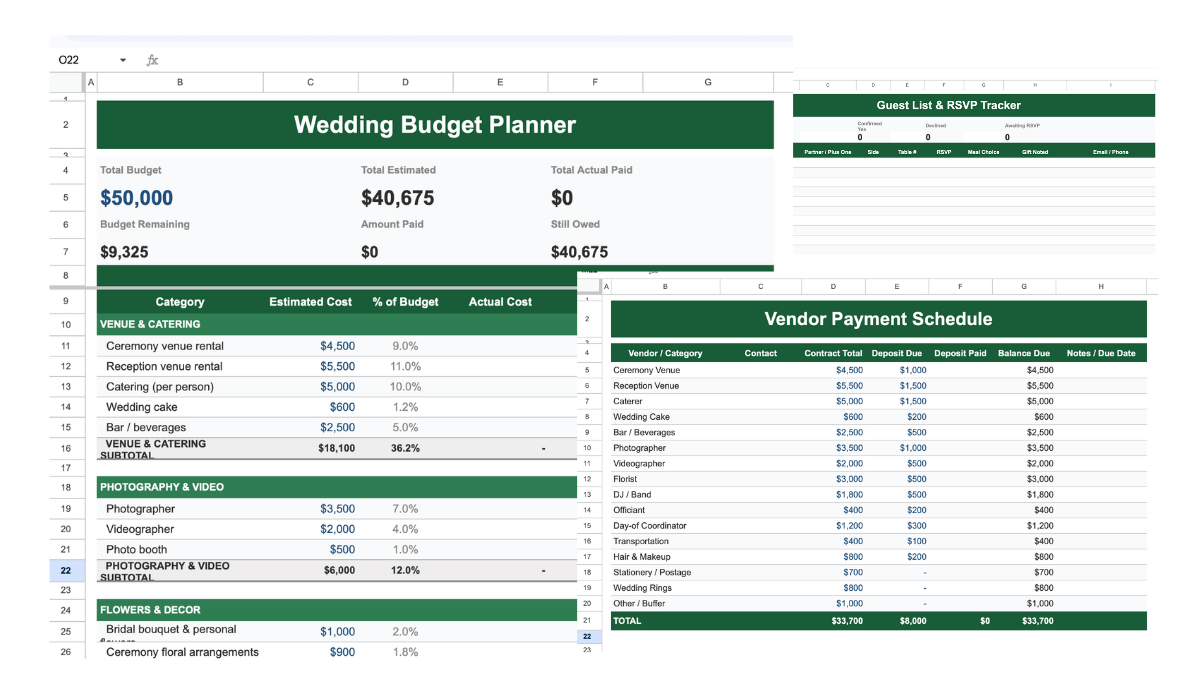
The free wedding budget spreadsheet is built around a simple structure. Each vendor category gets its own row: venue, catering, photography, florals, music, attire, day-of coordination, stationery, transportation, and a miscellaneous buffer. Two columns matter most: what you planned to spend, and what you’ve actually committed to.
A running total at the bottom updates automatically. A variance column shows the difference between your budget and your actual spend in each category. If one category goes over, you can see immediately which others have room.
Deposit tracking is built in too. Each vendor row has columns for the deposit paid and the balance due. You can see at a glance what’s already left your account and what’s still owed. The full picture is in one place, and it’s always current.
There are also seven individual wedding planning templates if you want to pull specific pieces out into their own files, including a dedicated vendor checklist and a wedding day schedule.
Use it before you book anything
The budget spreadsheet is most useful before any money moves. Not as a record of what you’ve already spent, but as a test of whether your number is realistic.
Before the first vendor call, open the file and fill in placeholder estimates for each category. Use numbers from a quick search or a local wedding guide. They don’t have to be exact. They have to be honest.
Add the service fee and gratuity to the venue estimate. Add overtime as a line item under photography. Put the day-of coordinator in the file even if you’re not sure you’re hiring one yet.
If the total is already at your ceiling before you’ve gotten a single real quote, the budget needs to change. Better to find that out now than after the venue deposit clears.
The spreadsheet doesn’t save you money. It just makes sure you know where you stand before you commit to anything you can’t undo.