
Two free Google Sheets grocery list templates below: a simple checklist version and one with a dropdown item list. Both work on any device, take seconds to set up, and were updated for 2026.
You’ll need a Google account to make your copy. Once you do, you’ll have unlimited access to edit, share, and use it from any device.
Why Google Sheets Works Well for Grocery Lists
Google Sheets saves everything to the cloud, so your list is available on your laptop at home and on your phone at the store. No syncing required. If you’re shopping with a partner, they can open the same list and see your updates in real time. It’s easy to share with a quick link, no app download required on their end.
It’s also free to use for anyone with a Google account, which means no subscription, no premium tier, and no ads asking you to upgrade. If you’d rather not use your phone in the store, you can send the list to a printer and bring a paper copy instead.
Unlike dedicated grocery apps, Google Sheets lets you customize everything. You can add columns, change fonts, adjust categories, and structure the list however your household actually works. If you already use Google Docs or other Google tools for daily tasks, keeping your grocery list in the same ecosystem means one fewer app to manage.
How to Build a Grocery List Template in Google Sheets
If you’d rather build your own than use the free templates below, here’s how to do it.
- Open Google Sheets and start a new spreadsheet. Click Blank under Start a new spreadsheet, or go to docs.new to open one instantly.
- Name the spreadsheet at the top. Something like “Weekly Grocery List” works fine.
- In row 1, add column headers: Item, Category, Quantity, and Done. You can also add a Unit Price column if you want to track spending.
- Add your grocery items in the rows below. Group them by category if you want to organize by aisle.
- Add checkboxes to the Done column by clicking a cell, then selecting Insert and then Checkbox. These work well on mobile, so you can check items off as you shop.
- Apply formatting to the header row: a background color and bold text help it stand out. You can also adjust fonts to match whatever style you prefer.

The checkboxes store true/false values in the cell. They’re straightforward to use on a mobile device, which is how I use this at the store.

Tips for Getting More Out of Your Grocery List
Plan Your Meals First
Building your grocery list from a weekly meal plan is one of the most reliable ways to avoid overbuying. Go through each meal, check what you already have, and add only what’s missing. It keeps the list short and the bill predictable. The meal planning spreadsheet pairs well with this approach if you want a dedicated place to map out the week’s meals before building your list.
Organize by Category or Aisle
Dividing your list by category (Produce, Dairy, Meat, Pantry) makes your trip through the store faster. You’re not backtracking for items you missed in a different section. The dropdown template below handles this automatically through the category column.
Add Quantities and Double-Check
Once your items are in, go back through and add quantities. If you’re cooking for guests or adjusting a recipe, update the quantities before you leave. Under-ordering means a second trip. Over-ordering means waste.
Add Prices to Track Your Budget
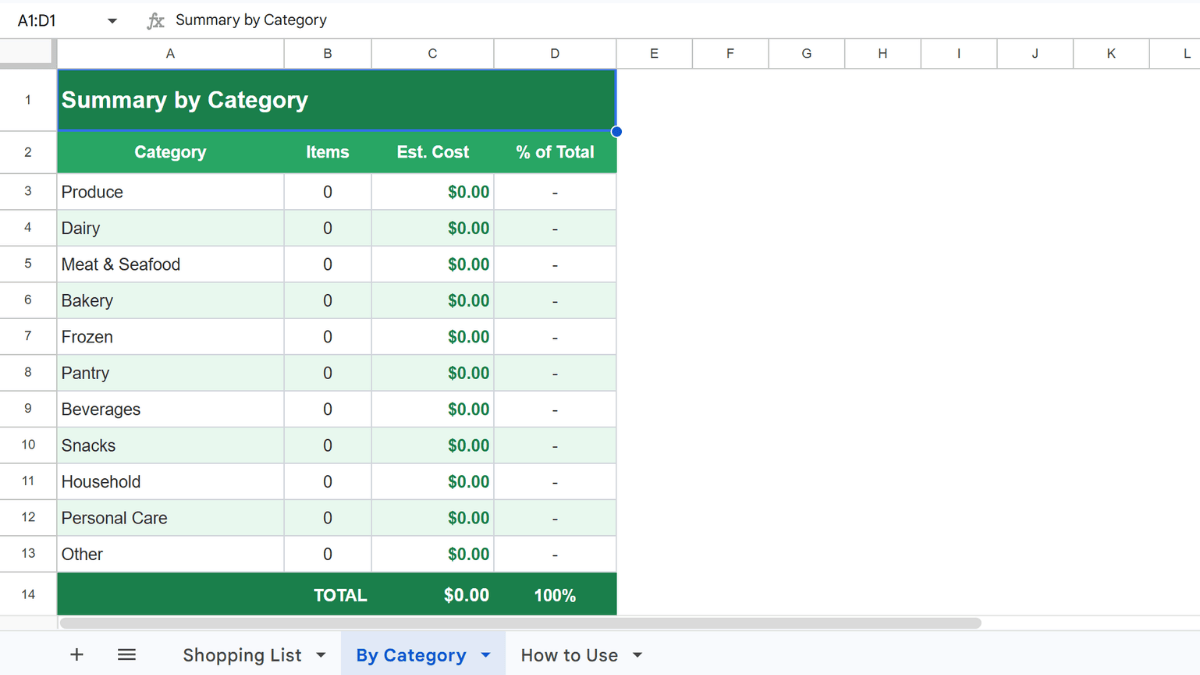
Adding a Unit Price column and a running total formula turns your grocery list into a rough budget tracker. Enter the prices from your last receipt and you’ll have a solid estimate of your bill before you leave the house. If you want a more complete version with a budget field, category totals, and a summary tab, the shopping list spreadsheet handles all of that in one file. For tracking what you actually spent across all categories after each trip, the expense tracker template is worth setting up alongside it.
Save Coupons in a Notes Column
Add a Notes column to your list and use it to log any coupons or discounts before you shop. It’s a small habit that adds up over time, and it’s much easier than trying to remember at checkout.
Free Grocery List Templates
Both templates below are free to use. They’re designed to be clean and straightforward. You don’t need to be a spreadsheet expert to use either one.
How the Dropdown Template Works
The dropdown template has two sheets. Here’s what each one does.
The Datasheet is where you store your master item list. Add every item you regularly buy, including things you don’t need this week. This list feeds the dropdown in the main sheet.
The List sheet is your actual shopping list. Each row in the Item column has a dropdown showing everything you added to the Datasheet. Select an item, add the quantity, and check it off as you go.

The columns in the List sheet:
- Item — a dropdown populated from your Datasheet. Click and select rather than typing each time.
- Quantity — enter a number or a measurement like 500g or 1.2kg.
- Added — a checkbox to mark items as they go into your cart.
- Notes — any reminders or specifics for that item.

If you add new items to the Datasheet and they don’t show up in the dropdown right away, refresh the page and they’ll appear.

Switching between sheets is a single tap on the tab name at the bottom. On mobile, the tab bar is visible in the Google Sheets app, so navigating between the two is just as fast as on desktop.
Frequently Asked Questions
Can I use a Google Sheets grocery list on my phone?
Yes. The Google Sheets app is free on both iOS and Android. Open the template link on your phone, tap “Use Template,” and it saves to your Google Drive. The checkboxes work well on mobile, so you can check items off as you add them to your cart.
How do I share my grocery list with someone else?
Open the spreadsheet, click the Share button in the top right, and send a link to whoever you’re shopping with. Set permissions to “Editor” so they can add or remove items. Any changes either of you make will show up in real time on both devices. You can also post the link in a group chat or share it through social media or messaging apps if you’re coordinating with multiple people.
Can I print a Google Sheets grocery list?
Yes. Go to File, then Print, and Google Sheets will open a print preview. You can adjust the layout, scale, and which columns to include before sending it to your printer. This works well if you prefer a paper list at the store.
How do I add a budget to my grocery list in Google Sheets?
Add a Unit Price column to your list and a SUM formula at the bottom to get a running total. For a more complete setup with a budget field, subtotals per item, and a category breakdown tab, the shopping list spreadsheet has all of that built in.
What’s the difference between the simple template and the dropdown template?
The simple template is a straightforward checklist. You type each item manually. The dropdown template lets you build a master list of items once, then select from that list each week instead of retyping. The dropdown version takes a few minutes to set up initially but is faster to use week over week.
Can I use this template in Excel?
The templates are built for Google Sheets. You can download either one as an .xlsx file via File, then Download, then Microsoft Excel. Basic formulas and checkboxes may need minor adjustments to work correctly in Excel.
How do I organize my grocery list by aisle or category?
Add a Category column to your list and sort by it before you shop. Common categories include Produce, Dairy, Meat and Seafood, Frozen, Pantry, and Household. The dropdown template includes a category column by default. You can also group rows manually by leaving a blank row between each category section.