
Asana stock is down about 50% year to date. The CEO changed. The company ran layoffs in February 2025 and revenue growth slowed to single digits. Analysts downgraded it in December, citing a Q3 net retention rate of 96%, which means customers are shrinking their accounts rather than expanding them.
Meanwhile, the project management software market keeps growing. One research firm puts the industry at around $8 billion in 2026, another at $11 billion. The companies inside that market are not having a good time.
Monday, ClickUp, and the rest look structurally similar
Asana is not an outlier. The entire category of stand-alone project management SaaS is struggling with the same thing. Companies are consolidating their software stacks. When a finance team tells IT to cut two tools from the list, the project management tool is usually one of the first to go, because a project management tool only matters to the teams using it, and those teams will find another way.
That other way is often a spreadsheet.
The buyer scrutiny problem
Asana’s COO called it “increased buyer scrutiny” on a recent earnings call. Translated, that means companies are asking whether they need the tool at all, and increasingly deciding they don’t. A Gantt chart, a task list, a shared timeline, none of these require a dedicated SaaS subscription. They require columns, dates, and one person who knows how to set up conditional formatting.
The category was built on the assumption that teams would always need specialized tools for this. That assumption is weakening.
Microsoft is doing to the category what Google did to Office suites
Microsoft shipped a Project Manager Agent inside Planner in January 2026. Copilot can generate a project template inside Excel. If you already pay for Microsoft 365, a standalone PM tool has to justify itself against something your team already has, and that bar keeps getting higher.
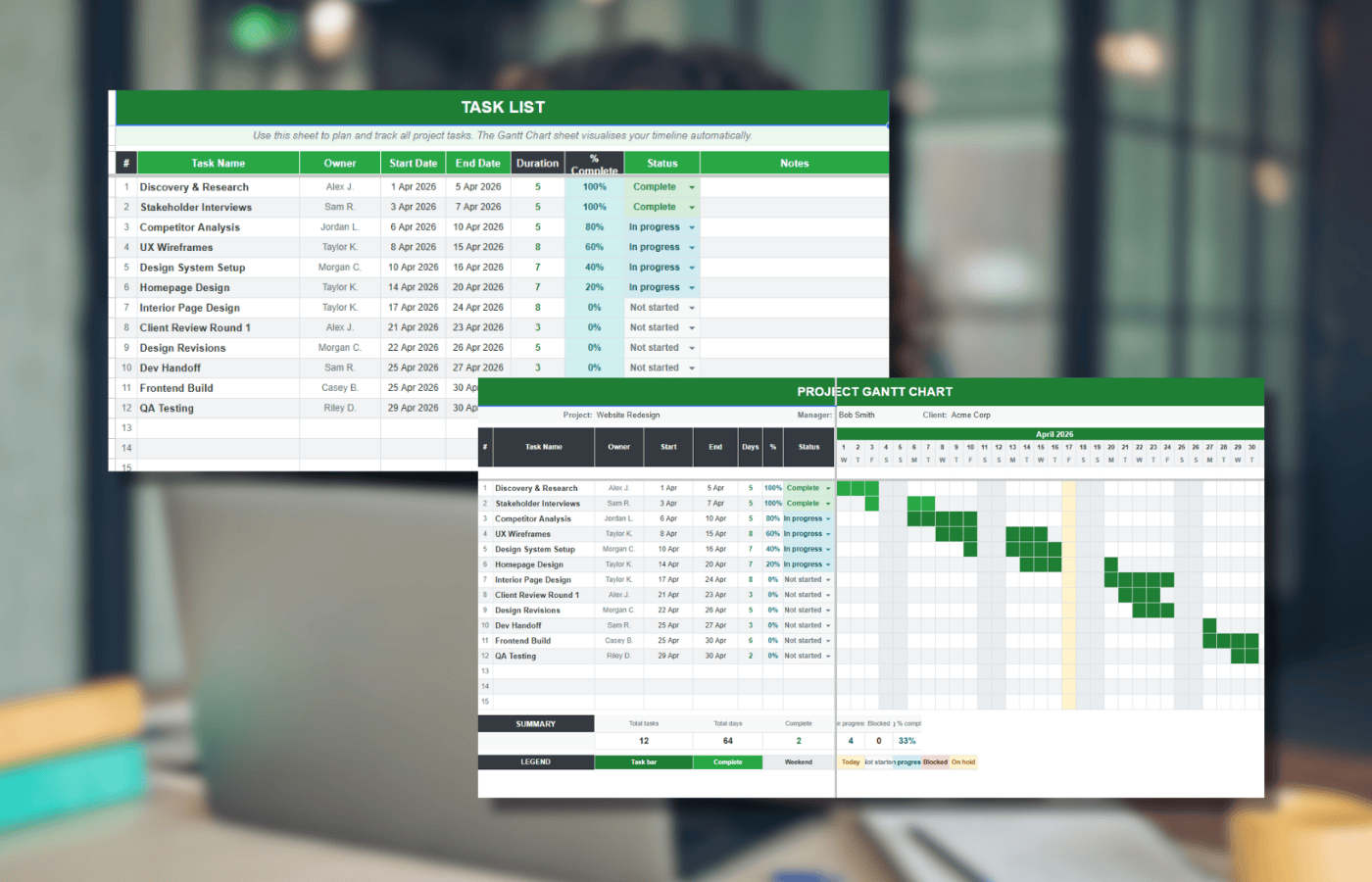
Google Sheets does the same work for free. Not as well, not with as many features, but well enough for most projects. A Gantt chart in Google Sheets takes about two minutes if you copy a template, and about thirty if you build one with conditional formatting.
What the analysts are missing
Most of the commentary on Asana’s stock focuses on AI as the threat. AI is part of it. The bigger part is that the underlying job, tracking who is doing what by when, never required specialized software in the first place. Spreadsheets were always good enough for small and medium teams. The SaaS era convinced those teams to pay for something more. That era is ending.
The companies that survive this category compression will be the ones that integrate into larger work platforms. Microsoft already has Excel and Teams. Atlassian has Jira. Smartsheet is a spreadsheet pretending to be PM software, which is the right shape for this moment.
The pure-play standalone PM tool is in a tough spot. The category took a decade and tens of billions in venture capital to build. It might take less than that to unwind.
It will be interesting to see which of these companies is still independent in five years.