
Something has shifted in how small and medium teams run projects. The tools that dominated the last decade, Asana, Monday, ClickUp, Trello, are losing ground to a tool that’s been there the whole time. Google Sheets. Excel. The plain old spreadsheet.
The data points are piling up. Asana’s stock dropped 32% in 2025, and another 50% so far in 2026. Its net retention sits at 96%, meaning existing customers are shrinking, not growing. Microsoft shipped a Project Manager Agent inside Planner in January. OpenAI rolled out ChatGPT for Excel in March, letting users generate a project tracker by typing prompts like, “build a project tracker with project owners, specific deadlines, and statuses”.
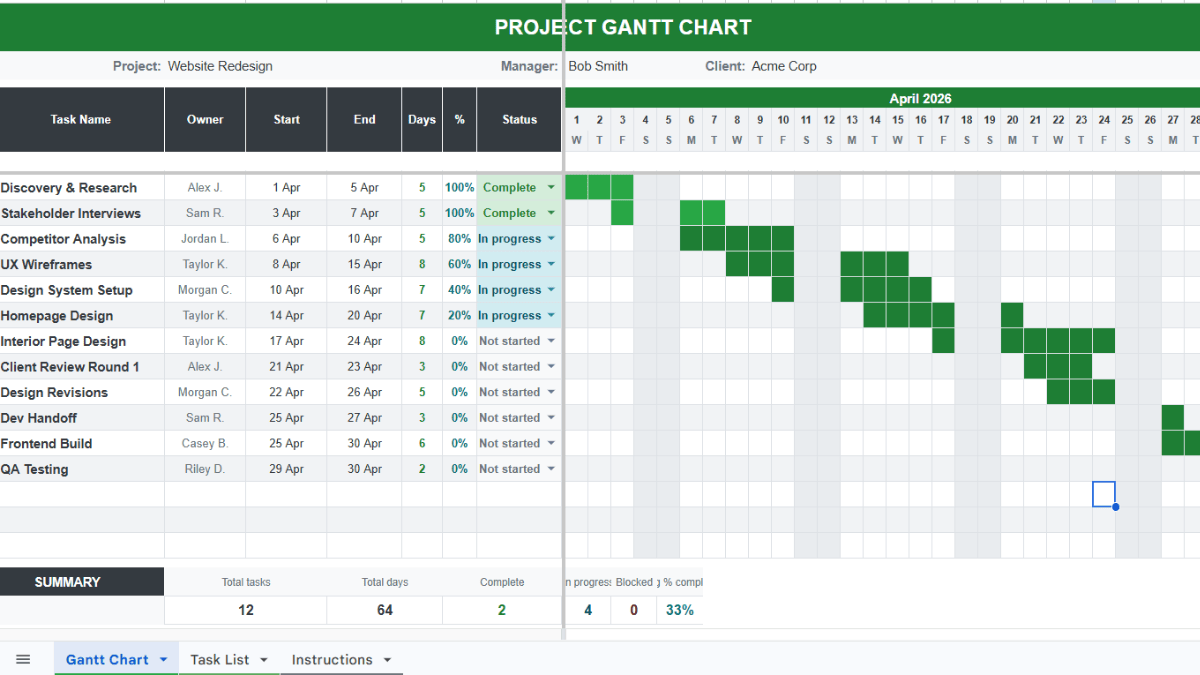
Maybe that’s why our Gantt chart templates in Google Sheets keeps getting copied by more teams.
Subscription fatigue is real
Finance teams started cutting SaaS subscriptions in 2023. The pace accelerated in 2024 and 2025. Asana’s own executives called out an increase in scrutiny on earnings calls, which is a polite way to say that when a software budget gets cut, the project management tool is often the first thing to go.
It goes first for a specific reason. The job it does, tracking who is doing what by when, is one of the few jobs a spreadsheet has always done well. A team cancels the PM tool, moves to a shared Google Sheet, and discovers the Sheet works. Everyone sees the timeline. Dates update. The boss can drop in without logging into a new platform.
AI made spreadsheets faster to set up
The part that used to take time was building the template. A Gantt chart in Google Sheets requires conditional formatting rules and a few formulas. Ten years ago, figuring that out took a weekend. Today, a user can ask ChatGPT or Claude to generate the formulas and have a working Gantt chart in under an hour. Or copy a template and be done in two minutes.
Microsoft is pushing this directly. Copilot inside Excel generates project templates from natural language prompts. Excel already has the formulas, conditional formatting, and sharing features that make PM software redundant for most small teams. Now it has an AI that builds the sheet for you.
The remote work argument went the other way
The original pitch for cloud PM software was that distributed teams needed a real-time platform to stay aligned. It turned out that Google Sheets is also a real-time platform. When a team switches from a dedicated tool to a shared Sheet, they lose some features. They also lose the weekly email asking them to log in, the seat-based pricing, and the onboarding tax on new hires.
Most small teams decide the trade is worth it.
What the trend looks like on the ground
Search volume for “Gantt chart Google Sheets” and “project management spreadsheet” has been rising for three years. Free template downloads are up across the category. The template-heavy sites like Spreadsheet Point show growth in the PM category. The paid PM tool category shows growth in dollars but stagnation in logos, which means the large enterprises that were already paying are paying more, and the small teams are leaving.
The spreadsheet is not new. What’s new is that the tools that were supposed to replace it have started to shrink, and the tools meant to replace those tools, AI agents inside spreadsheets, make the spreadsheet stronger.
It’s a good time to have a good Gantt chart template bookmarked.