
Most couples start with a short list of vendors. Photographer, venue, caterer. Maybe a florist. It feels manageable at first.
Then the list grows. The ceremony needs a musician separate from the reception DJ. The venue doesn’t provide linens. Someone has to coordinate the day so the two of you aren’t fielding questions from vendors while trying to get married.
Missing a vendor is rarely catastrophic on its own. Forgetting to follow up on a booking, or realizing too late that someone isn’t available on your date, is where things actually go wrong. This is the full list, organized by category, with notes on what to track for each one.
Venue and catering
The venue is usually the first booking and the one that sets everything else. A few things worth knowing before you sign: some venues require you to use their in-house caterer, and some have a minimum spend on food and beverage that isn’t always obvious in the initial quote. If the ceremony and reception are at different locations, that’s two venue contracts, two sets of contacts, and two deposit timelines to track.
For each of these, you want the contact name, the quoted price, the deposit amount and due date, and whether you have a signed contract.
- Ceremony venue
- Reception venue
- Caterer (if separate from venue)
- Bar service (if separate from caterer)
- Cake or dessert vendor
Photography and video
Photographers and videographers book earlier than almost any other vendor, and they typically require larger deposits to hold the date. If you’re more than a year out, this is still worth locking in before you assume availability. A second shooter is often a separate line item, not included in the base package. Ask before you assume.
- Photographer
- Videographer
- Photo booth rental (if applicable)
Music and entertainment
The ceremony musician and the reception DJ or band are almost always different vendors, and couples frequently forget to book one or the other until late in planning. If you’re using an outdoor venue, check whether you need a permit for amplified music before you book anyone. Some venues handle this, some don’t, and finding out after the fact creates problems.
- Ceremony musician (string quartet, pianist, acoustic guitarist, etc.)
- Reception DJ or band
- Sound equipment rental (if the venue doesn’t provide it)
Florals and decor
Florists quote for flowers. Tables, chairs, linens, and lighting often come from entirely different vendors that couples assume are included with the venue. Confirm what the venue actually provides before your florist meeting, so you’re not budgeting for centerpieces without knowing what the tables look like.
- Florist
- Furniture and linen rental
- Lighting vendor
- Any additional decor rentals (arches, signage, lounge furniture, etc.)
People and services
These are the vendors that tend to get booked last and cause the most stress when forgotten. Hair and makeup books up on popular dates faster than most couples expect. Transportation is easy to deprioritize until the week before the wedding. The day-of coordinator is often the last thing added to the budget, and almost always the one couples say they’d have hired sooner.
- Officiant
- Hair and makeup (for the couple, and often for the wedding party)
- Transportation (for the couple, and sometimes for guests)
- Day-of coordinator
The miscellaneous column
These are the smaller items that don’t fit neatly into a category but add up over time. Stationery and printing tends to cost more than expected once you add envelopes, postage, and day-of signage. The wedding website is usually free or low-cost, but some platforms charge for premium features. Worth tracking them even if they feel minor.
- Stationery and invitations
- Day-of signage and printed materials
- Favors
- Wedding website
- Photo sharing app or guest upload platform
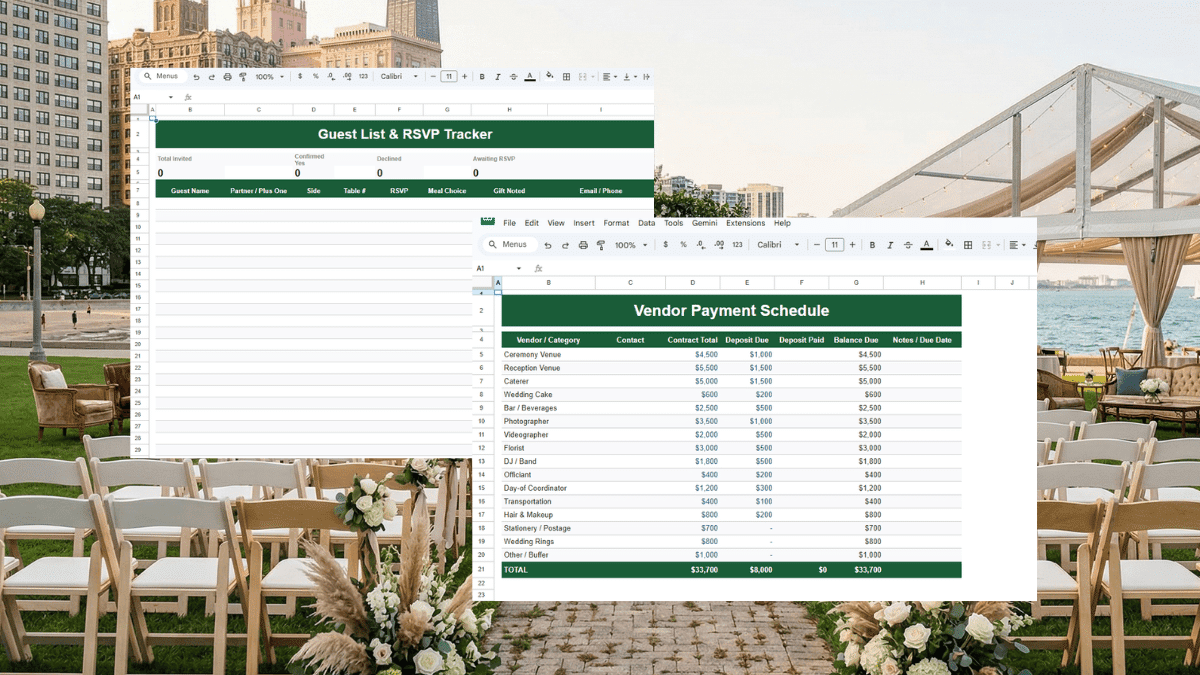
Putting it all in one place
The free vendor checklist template tracks all of this in a single file. Each vendor gets a row with columns for vendor name, contact name, phone and email, quote amount, deposit paid, balance due, contract received, and notes. One row per vendor, every vendor in the file.
When the venue calls the week before the wedding to confirm timing, the answer is in the spreadsheet. When you need to send the final headcount to the caterer, the contact is in the spreadsheet. When you can’t remember whether you signed the florist contract, the spreadsheet tells you.
There’s also an all-in-one wedding planning spreadsheet that combines the vendor tracker with a budget tab, guest list, and timeline in a single file. Either way, the vendor list is the same. The only difference is whether you want everything together or in separate files.
The list above is longer than most couples expect when they start. That’s the point.