
Tracking small business expenses is one of those tasks that feels manageable until it isn’t. Receipts pile up, monthly expenses blur together, and by the time tax season arrives, reconstructing what happened is a headache you could have avoided. A business expense spreadsheet fixes most of that before it starts.
You don’t need accounting software like QuickBooks to stay organized. A well-built spreadsheet gives you real-time visibility into where money is going, keeps your record-keeping clean for audits, and makes reimbursement simple when employees or contractors submit what they’ve spent. Below are three free templates you can copy and use today, along with a walkthrough of how to build your own in Google Sheets.
Table of Contents
What Is a Business Expense Spreadsheet?
A business expense spreadsheet is a structured digital document for recording, categorizing, and reviewing your company’s spending. Each row is a transaction. Each column captures something specific about it: the date, the type of expense, the merchant, the amount, how it was paid.
The goal is accuracy and visibility. When every expense is logged consistently, it’s easy to spot discrepancies, verify totals against bank statements, and pull the numbers you need for compliance or tax deductions. Without that structure, small business expenses tend to become a guessing game, which costs time and sometimes money.
What a Good Business Expense Spreadsheet Should Include
A solid expense sheet covers these elements:
- Expenses by type of expense: List individual line items or group them into categories like fixed costs, office supplies, business travel, and professional services. Categorizing by type of expense makes it easier to spot patterns and find areas to cut.
- Date and description: A date column and a short description for each transaction give you context when you’re reviewing records weeks later. This matters especially during audits, when you need to explain specific charges quickly.
- Amount: Record the exact cost of each expense. Precision here is what makes the rest of the spreadsheet reliable.
- Payment method: Track whether each expense was paid by cash, credit card, debit, or check. This makes reconciling against bank statements much faster and helps catch discrepancies early.
- Merchant or vendor: A column for the merchant or supplier name supports vendor management and gives you a record for receipt tracking purposes.
- Tax information: If applicable, flag which expenses are deductible. Doing this as you go is far less time-consuming than sorting it out at year-end.
- Subtotals and totals: Use SUM or SUMIF formulas to calculate totals by category automatically. This keeps your numbers current without manual effort.
- Monthly summary: A summary tab or section for monthly expenses lets you compare spending period over period and track whether you’re staying within budget.
You can also add charts for a quick visual overview of spending by category or month.
Which Template Is Right for You?
| Template | Best for | Key feature |
|---|---|---|
| Simple Expense Sheet | Freelancers, contractors, small teams logging transactions as they happen | Flexible per-transaction logging with budget vs. actual tracking |
| Monthly Expense Spreadsheet | Small business owners who want a full-year overview by expense category | Monthly columns with sparklines for visual trend comparison |
| Small Business Income and Expense Sheet | Businesses that need to track both income and expenses in one file | Separate sections for fixed, variable, and supply costs with income tracking |
Free Business Expense Spreadsheet Templates
All three templates below work in Google Sheets and are compatible with Microsoft Excel if you download them as .xlsx files.
Simple Expense Sheet Template

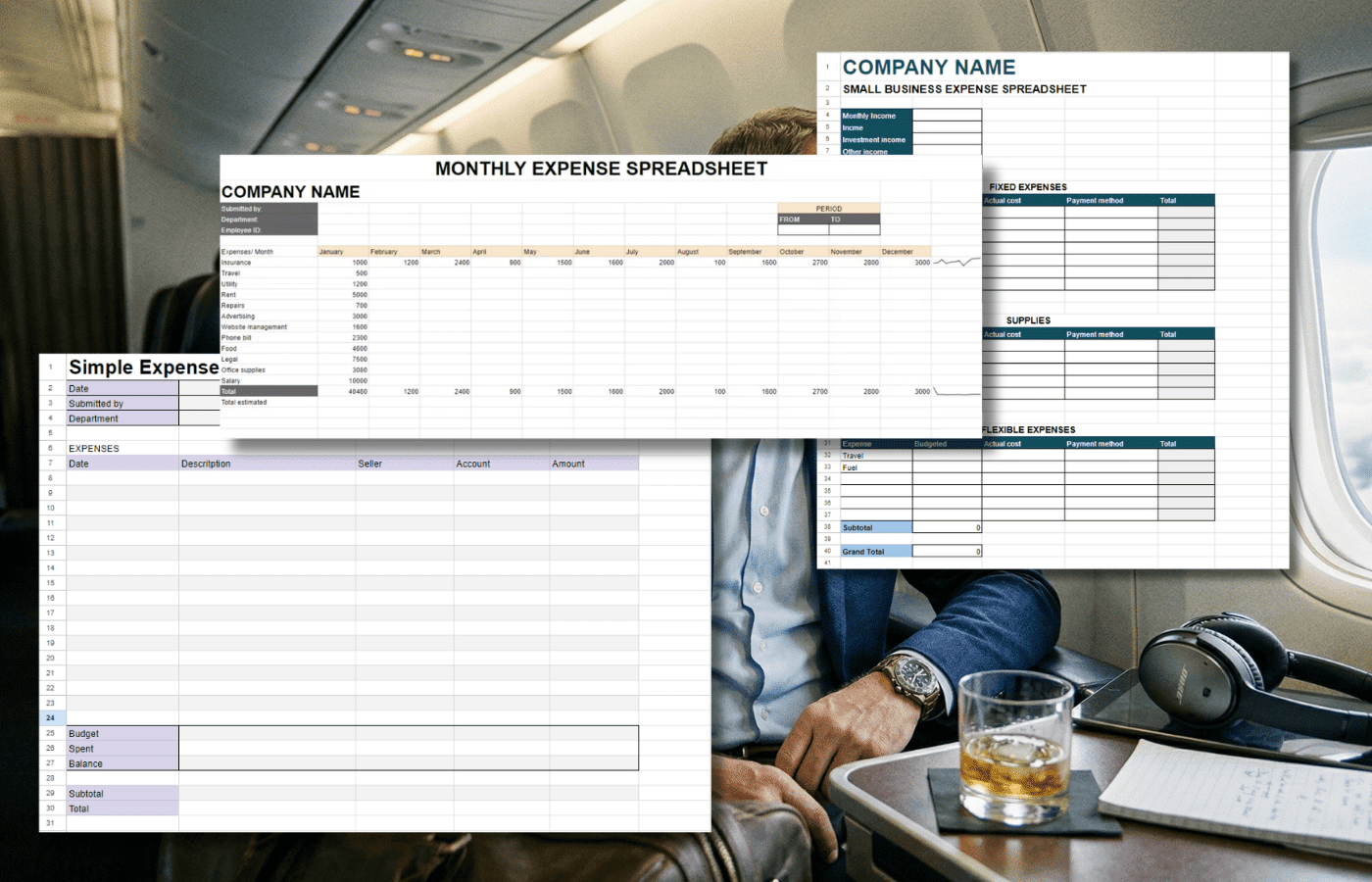
This template is built for straightforward per-transaction logging. It’s a good fit for freelancers, contractors, or anyone on a small team who needs a clean way to record expenses without a lot of setup.
It includes columns for employee details, date, expense category, description, merchant, payment method, and amount, along with budget, totals, and a balance column. You can also use it as a trucking expense template with minor adjustments to the categories.
Monthly Expense Spreadsheet

This template gives you a full-year view of monthly expenses broken down by category. Each expense row has a column for every month, and a sparkline at the end of each row lets you see trends at a glance without building a separate chart.
It includes employee details, date range fields, a categorized expense list, monthly totals, and pre-filled formulas throughout. To copy the sparkline formula to additional rows, click the cell and drag the small circle at the bottom-right corner down through the rows you want to fill.
This format works well for small business owners who want to compare monthly expenses across the year and catch spending patterns before they become problems.
Free Small Business Income and Expense Spreadsheet

This template is the most complete of the three. It covers both income and expenses in one file, which makes it useful for small business owners who want a single source of truth for their financials.
It has four sections: income (with monthly totals), fixed expenses, supplies, and flexible expenses. Each section includes description, budgeted amount, actual cost, payment method, and totals. You can adapt it for an independent contractor’s expense tracking setup with minimal changes.
How to Build a Business Expense Spreadsheet in Google Sheets
If you’d rather build your own, here’s how to set one up from scratch:
- Open a blank spreadsheet in Google Sheets.
- Rename the first sheet by double-clicking the tab and giving it a clear name like “Expense Log” or “Business Expenses.”

- Add a header section at the top for employee name, department, and the date range the sheet covers. This matters for reimbursement workflows and makes it easier to sort records during audits.

- Set up column headers in the first data row. Common headers: Date, Type of Expense, Description, Merchant, Payment Method, Amount.

- Adjust column widths so every field is readable without scrolling.
- Start entering expenses. Add new rows as needed. If you’re logging business travel or mileage, add a dedicated column for those so they’re easy to pull for tax deductions later.
- Format the sheet however is useful: freeze the header row, apply alternating row colors, or add conditional formatting to flag large expenses.
- Add formulas. Use SUM for column totals, SUMIF to subtotal by category, and a running balance formula if you’re tracking against a budget. The templates above already have these built in.
When you’re done, share the file with your accountant or team via the Share button in the top-right corner. Google Sheets saves automatically, so you won’t lose data to a crash or a forgotten save.
Why Use a Spreadsheet Instead of Accounting Software?
Accounting software like QuickBooks is a good fit for businesses with complex needs: payroll, multi-entity reporting, high transaction volume. But for most small business owners, it’s more tool than necessary, and the monthly cost adds up.
A Google Sheets expense tracker gives you real-time visibility into your spending without a subscription. It’s accessible on any device, easy to share with a bookkeeper or accountant, and flexible enough to adapt as your business changes. The receipt tracking happens in the same file as everything else, which cuts down on the hassle of hunting through separate apps or paper files.
For small teams and early-stage businesses, a well-maintained spreadsheet handles most of the record-keeping work that keeps you compliant and out of trouble at tax time. If you eventually need more, your spreadsheet data is easy to export into whatever accounting software you move to.
For more financial templates, see our Google Sheets profit and loss templates, our Google Sheets accounting templates, and our travel expense log template if you need a dedicated tracker for business travel and mileage.
Final Thoughts
The goal of a business expense spreadsheet is to make record-keeping automatic enough that you’re never scrambling to reconstruct what happened. Any of the three templates above will get you there. Download the one that fits your situation, adjust the categories to match how your business actually spends money, and start logging. The compliance and tax deduction benefits follow naturally once the habit is in place.
With the promo code SSP you can also save 50% off all templates in our premium library.
Frequently Asked Questions
What should I include in a business expense spreadsheet?
At minimum, include the date, type of expense, merchant name, payment method, and amount for each transaction. Adding a description column, a budget column, and a totals row makes the sheet more useful for monthly reviews and tax preparation. If your business involves business travel, add a mileage column as well.
Can I use these templates in Microsoft Excel?
Yes. All three templates are built in Google Sheets but can be downloaded as .xlsx files and opened in Excel. Most formulas transfer without issues. Sparklines may need to be rebuilt in Excel since Google Sheets and Excel handle them differently.
How do I categorize expenses for tax deductions?
Common deductible categories for small business expenses include office supplies, business travel, mileage, software subscriptions, professional services, marketing, and meals with clients. Add a column to flag deductible expenses as you log them so you’re not sorting through everything at year-end. Consult a tax professional if you’re unsure which expenses qualify in your situation.
Do I need accounting software like QuickBooks if I use a spreadsheet?
Not necessarily. For most small business owners and contractors, a well-maintained expense spreadsheet handles the core record-keeping needs. Accounting software becomes more useful when you have payroll, multiple revenue streams, or a high volume of transactions that would be time-consuming to log manually.
How do I handle employee reimbursement with an expense spreadsheet?
Use the simple expense sheet template with employee name and department fields filled in. Employees submit their completed sheet with receipts attached. You review the entries, verify amounts, and mark reimbursed items in a status column. Keeping a copy of each submitted sheet creates a clear record for audits and compliance.
How often should I update my business expense tracker?
Log expenses as they happen rather than saving them for a weekly or monthly catch-up. Receipt tracking is much easier when details are fresh, and real-time logging reduces the risk of discrepancies when you reconcile against bank statements.
Can contractors use these templates?
Yes. The simple expense sheet and the income and expense template both work well for independent contractors. The income section of the third template is especially useful for contractors who need to track both what they earn and what they spend in the same file.
What is the difference between an expense tracker and an expense report template?
An expense tracker is an ongoing log you update continuously. Expense report templates are typically single-period documents, often one page per employee per pay period or trip, submitted for reimbursement approval. The simple expense sheet above functions as both depending on how you use it.
Related:
- Profit and Loss Templates for Google Sheets
- Free Google Sheets Accounting Templates
- Free Purchase Order Template for Google Sheets (+ How to Use)
- The Best Google Sheets CRM Free Template
- Travel Expense Log Spreadsheet
- Independent Contractor Expense Template
- Freelancer Income Tracker
- Free Google Sheets Budget Templates